
Posted on: January 9, 2026
Updated on: January 20, 2026
Author: Liane Carter
SHARE:
In a bold move reshaping federal dietary guidance, the Trump administration announced a historic reset of the U.S. nutrition policy, putting real, whole foods back at the center of public health recommendations. This declaration signals a shift away from decades of advice that prioritized low-fat, high-carb diets, offering Americans a framework more aligned with contemporary science and traditional eating practices.
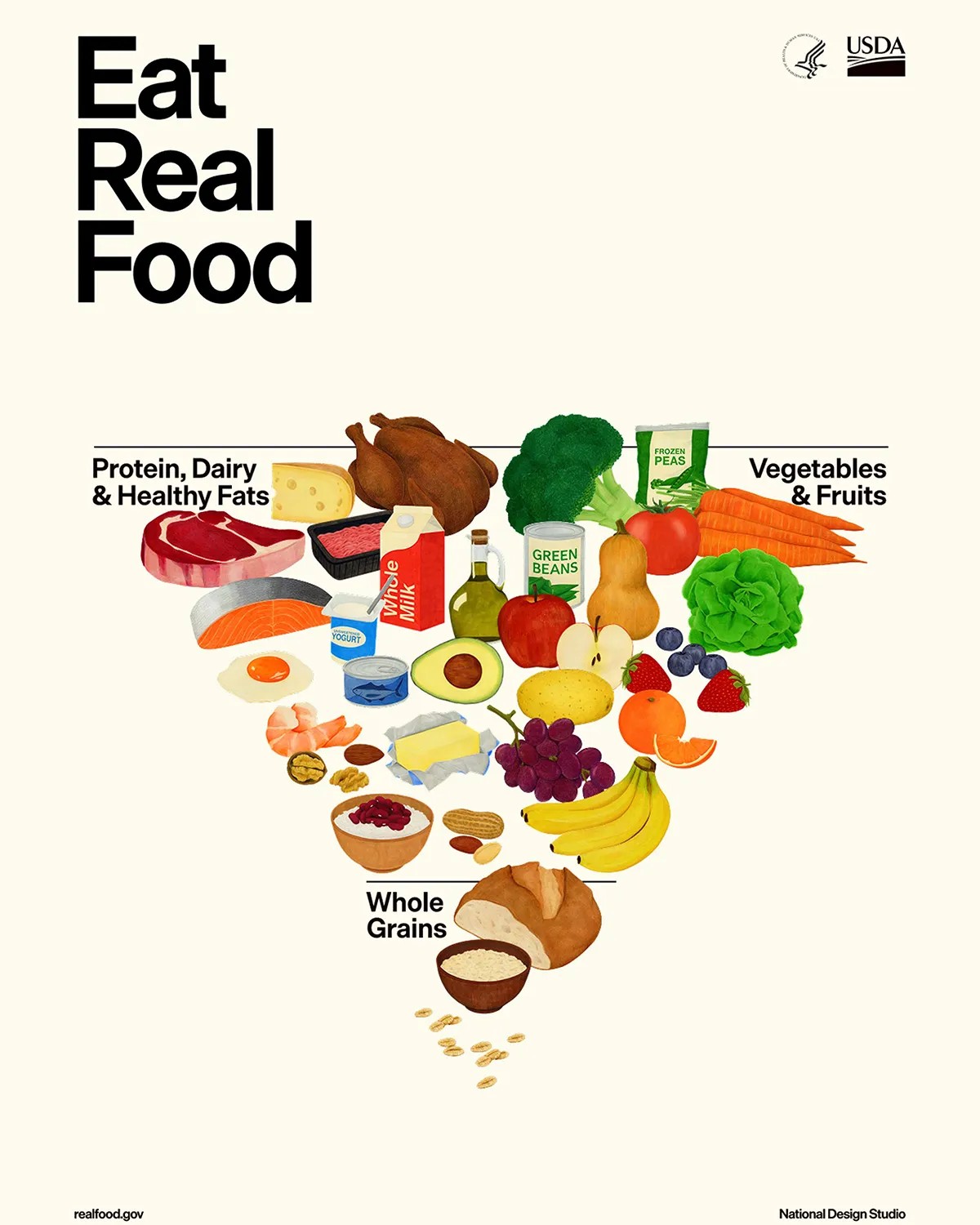
The Upside-Down Food Pyramid: What’s Changed?
One of the most striking changes is the adoption of what has been described as an “upside-down” food pyramid. Unlike the classic pyramid that emphasized grains at the base and minimized meat and fats, the new model places whole vegetables, fruits, high-quality proteins, and healthy fats at the foundation, while processed foods and added sugars occupy the top tier.
This approach emphasizes nutrient density over calorie counting, encouraging people to choose foods that naturally support energy, immunity, and overall health. Animations can help viewers visualize this pyramid, showing how everyday meals can align with these guidelines by stacking nutrient-rich foods at the base.
Key Principles of the New Dietary Guidelines
The updated guidelines, according to the Department of Health and Human Services (HHS), focus on several pillars:
Minimizing Ultra-Processed Foods – Avoiding heavily refined items like sugary snacks, sodas, and certain packaged foods.
Emphasizing Real Foods – Prioritizing meats, dairy, vegetables, fruits, legumes, and whole grains.
Supporting Sustainable Health – Encouraging dietary patterns that promote long-term wellness rather than short-term weight loss.
Personalization – Recognizing that dietary needs vary based on age, activity level, and health conditions.
Visual aids, such as animated meal plates and interactive charts, can help readers see how to implement these principles in daily life.
Reactions from Nutrition Experts and Advocates
The announcement has generated discussion across the nutrition and public health communities. Advocates like Robert F. Kennedy Jr. have praised the reversal of low-fat dogma, highlighting the potential benefits of including red meat and full-fat dairy in moderation. Critics caution that messaging must balance traditional dietary patterns with individual health considerations to avoid confusion.
Implications for American Health
This policy shift has far-reaching implications. By emphasizing whole foods and minimizing processed products, the government aims to reduce chronic conditions like obesity, diabetes, and heart disease. For educators and health professionals, animated demonstrations of the pyramid can serve as a practical tool to teach communities how to integrate these principles into everyday meals.
The Trump administration’s declaration on the food pyramid represents a fundamental pivot in U.S. nutrition policy, bringing science, tradition, and practicality together. With clear visual guidance and accessible instructions, Americans are now better equipped to make informed choices about what they eat, emphasizing health and well-being at every meal.
References
U.S. Department of Health & Human Services. Fact Sheet: Historic Reset of Federal Nutrition Policy.
https://www.hhs.gov/press-room/fact-sheet-historic-reset-federal-nutrition-policy.htmlPeople Magazine. RFK Jr. Unveils Upside-Down Food Pyramid With New Dietary Guidelines.
https://people.com/rfk-jr-unveils-upside-down-food-pyramid-with-new-dietary-guidelines-11881012Associated Press. U.S. Dietary Guidelines and Federal Nutrition Policy Shift.
https://apnews.com/article/dietary-guidelines-health-agriculture-federal-nutrition-2d8fa56be3c5900fc45116af7c69d786